Quick Links
Considering cutting the cord and embracing streaming services full-time? You need to make sure your internet connection meets the minimum speed requirements. These vary between streaming services, but there are a few ways to check your internet is up to scratch.
How Fast Should Your Internet Be to Stream Movies, TV, and More?
Your internet speed directly affects how smoothly your content streams. Different resolutions and formats require different bandwidths.
Streaming Quality
Resolution
Minimum Speed Requirement
Standard Definition (SD)
High Definition (HD)
720p or 1080p
Ultra High Definition (UHD/4K)
25 Mbps or higher
HD streaming is the standard for most households, as it balances quality with moderate internet usage. Platforms like Netflix, Disney+, and Hulu recommend at least 5 Mbps for HD quality. However, if you have a 4K-capable device and astreaming subscription with 4K content, you’ll need at least 25 Mbps for optimal performance.
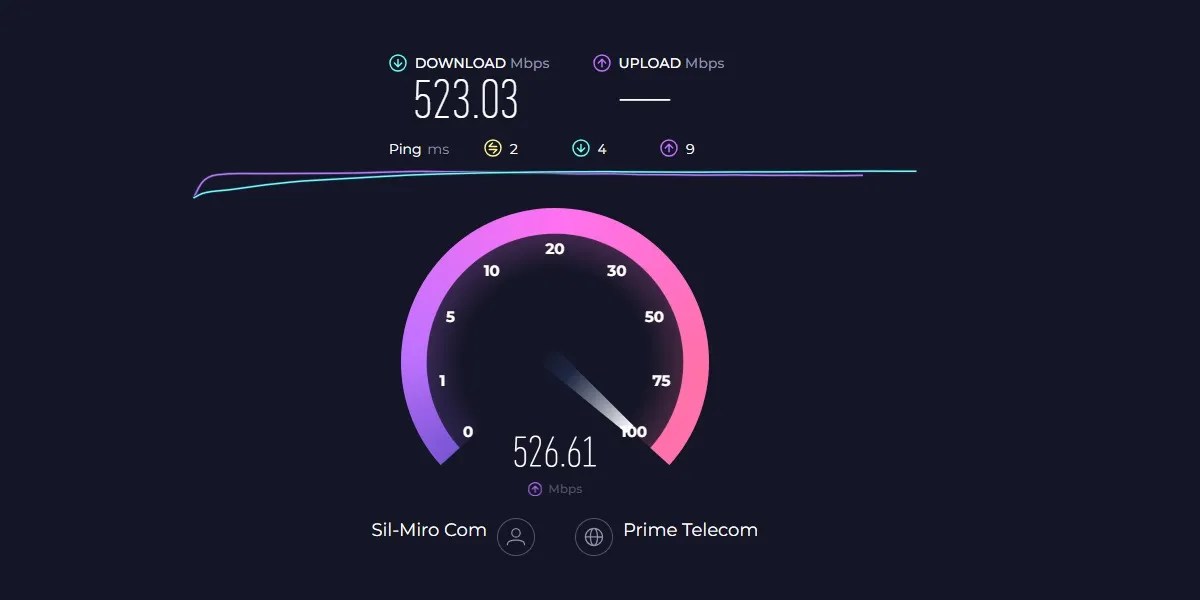
It’s also worth noting that different platforms have varying requirements. For example:
These speeds are per device. If multiple people in your home stream content simultaneously, you’ll need even higher speeds to accommodate everyone.

The Required Internet Speed Depends on What You’re Watching
Different types of streaming content place varying demands on your internet connection, which determineshow fast your internet should be.
1.Movies and TV Shows
Movies and TV shows are the most popular streaming options.
Services like Netflix, Hulu, and HBO Max recommend consistent speeds depending on the resolution.

2. Live Streaming (Sports, News, Events)
Live streaming is more demanding than on-demand content because it requires real-time data transmission. When watching a live stream, you’ll also have to consider latency. Latency (measured in ms) represents the delay in data transfer between your device and the server. While not as critical for watching movies, low latency is essential for real-time content like live streams.
Services like ESPN+, YouTube TV, and Hulu + Live TV recommend at least 10 Mbps at under 50ms for HD live streaming. For 4K live streams, aim for 30 Mbps at under 30ms to avoid buffering or delays.
3. Tutorials and Educational Content
Streaming tutorials, online courses, or instructional videos often requires less bandwidth. Platforms like YouTube or Coursera typically encode these videos at lower bitrates to make them accessible to a global audience:
Educational content, especially for subjects like coding or design, often prioritizes clarity over high resolution, making it less demanding.
Other Factors to Take Into Account Besides Internet Speed
Internet speed alone doesn’t guarantee smooth streaming.
Cutting the cord is an excellent way to save money and enjoy more flexibility, but it requires a solid internet plan tailored to your streaming needs. Ensure your connection aligns with the quality and type of content you watch.
