Once It Was an Internet Giant—But Who Owns AOL Today?
For many people in the US and abroad, the first taste of the wonder that is the online world came courtesy of AOL. It was one of the first true internet giants and, at its peak popularity, was one of the world’s highest valued companies. But what happened to AOL, and who owns AOL today?
What Was AOL, and Why Was It So Important?
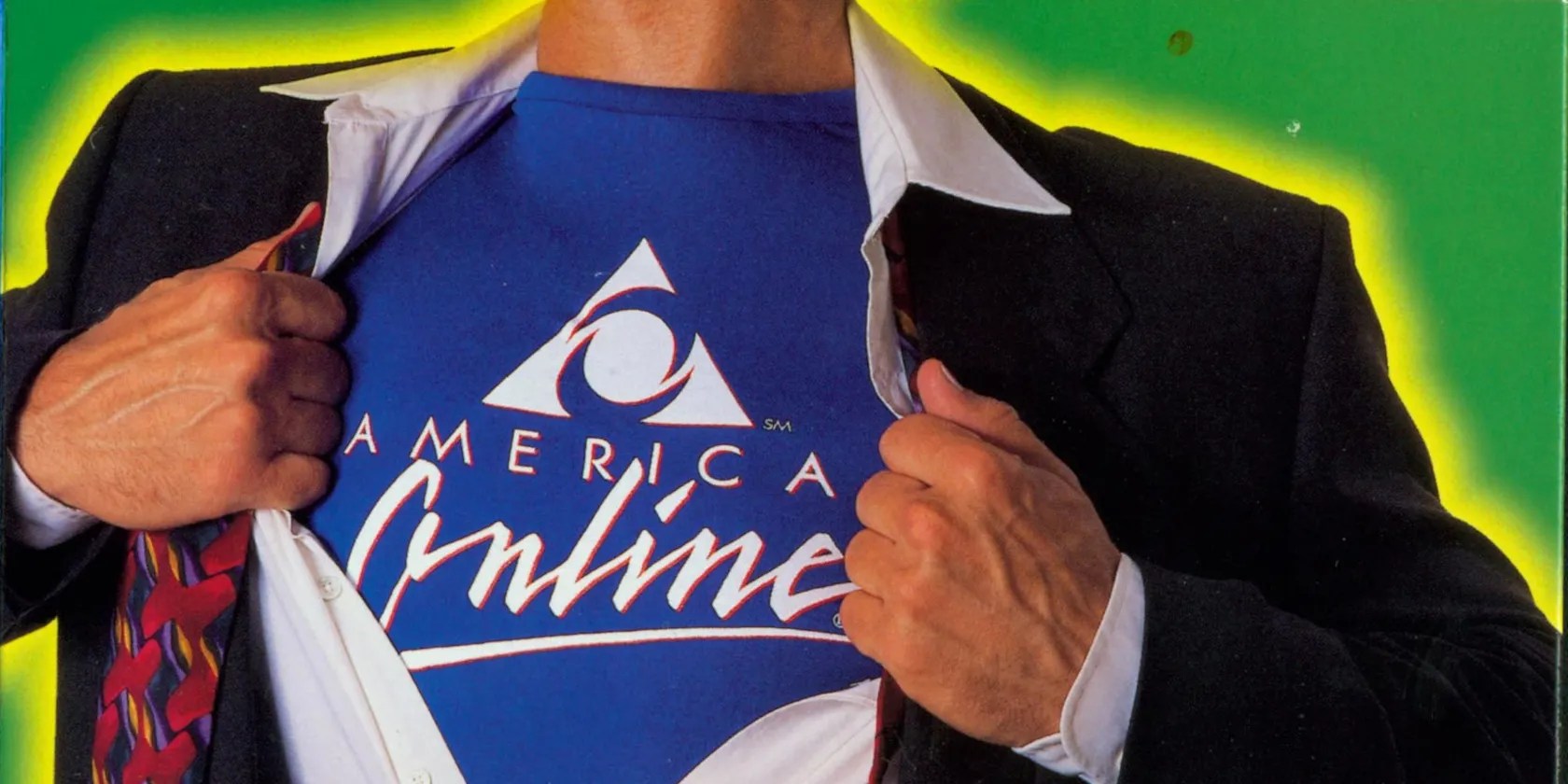
America Online (AOL) was born as Quantum Link in 1985—long before the HTTP, HTML, browsers, and the World Wide Web even existed—and offered email, online chat, news, file sharing, and instant messaging alongside a selection of online games.
Rebranded as AOL in 1989, the company was ideally placed to provide services to Americans eager to get online when the web—in more or less the same form it is today—made its public debut in 1991.

You’ll notice that we’ve been using the word “web” rather than the “internet” so far. This is because the World Wide Web is what you’re using right now. You access it through browsers, type in URLs beginning with HTTP or HTTPS, and click on links to easily navigate from one page or site to the next.
The internet is anunderlying system that makes the web possible. It’s a vast network of interconnected computer networks dating back to the 1970s and uses the Internet protocol suite (TCP/IP) to communicate.
The web made it easy to use the internet to communicate with friends, browse from one site to another, or even set up your own server at home. You didn’t need to be especially technical to access what the web offered—it just worked.
The web, and AOL, along with it, were ready to change the world.

AOL’s Rapid Expansion
The technical barriers to entry into the new and ballooning online world were low, but the financial requirements were not. You needed a computer of some sort, a copper phone line, and a modem (a technology that had been around since the 1920s).
One of the cheapest modems then was the CompuCom SpeedModem Champ, which retailed at $169—equivalent to around $350 in 2022.

Prices dropped quickly as demand and manufacturing capabilities grew, and in 1993, AOL began a massive campaign to—as its name suggests— get America online.
The campaign, which lasted several years, saw AOL mass mailing CDs to every household in the US, and later the UK, Europe, and even further afield.

The idea was simple: AOL made it even easier to get online than before—just insert the disc into your machine, follow the instructions to physically connect your computer to therouterand the phone line, and that’s it, you’re online.
For users who didn’t know quite what to do with the internet at home, AOL developed a web portal to show them the best this brave new world had to offer—including partnerships with knowledge bases such as National Geographic and the Smithsonian, chat clients to talk to their friends, a special kids version of AOL, alongside lists and categories of curated sites—all at a low hourly fee.
AOL offered free 100, 500, 750, or 1000-hour trials to get potential customers on board, and if that didn’t work, they’d be sending you a new CD next week as well. And the week after, and the week after that, too. If you were the kind of person who refused to embrace the modern age and continued to buy newspapers, it was inevitable that there would be an AOL CD hidden in the sports section.
In an interview withTechCrunch, Jan Brandt, AOL’s former Chief Marketing Office, revealed, “At one point, 50% of the CDs produced worldwide had an AOL logo on it.” That’s a lot of CDS, and in many households, the surplus was used as coasters, bird scarers, clocks, and birthday cards.
With this saturation level, AOL couldn’t help but succeed, and by 1997, AOL had 34 million subscribers.
AOL was makinga lotof money and expanding fast. Over the next few years, it acquired Netscape (kind of a big deal), MapQuest (a moderately big deal), and a dominant stake in Time Warner (a huge deal). This gave the AOL Time Warner enterprise a combined value of $360 billion (around $600 billion in 2022 adjusted for inflation). For reference, Amazon is currently valued at around $1,100 billion.
Decline and Fall of an Online Empire
The early 2000s were a hard time for internet companies; the dot-com bubble burst peaked during a period covering late 2001 and early 2002 and saw internet-based companies lose up to 75% of their value. Despite AOL continually pushing new products over the years, in 2005, Google—the new king of the internet hill—announced plans to buy a stake in AOL.
In an effort to shore up their business, AOL began giving away email accounts, free storage, and custom domain names to non-AOL customers. At the same time, they raised prices for customers and moved their call centers offshore.
By 2007, there were only 10 million AOL subscribers worldwide—the company began to close its physical properties, shed non-core businesses, and make increasingly bizarre purchases—such as the Bebo social network.
Eventually, AOL divorced from Time Warner and began a protracted period of buying and selling other media companies, distribution networks, and questionable tech ventures. Verizon bought AOL for $4.4 billion in 2015 and another ailing web giant, Yahoo!, for $4.5 billion in 2017.
Together, the companies were rebranded as “Oath”, with the promise of relaunching as “one of the most disruptive brand companies in digital.” It’s fair to say that AOL, as part of Oath, failed to achieve anything worthy of note as of writing.
The two companies were sold together to private equity firm Apollo Global Management for $5 billion in 2021, and while Yahoo! was resurrected, it dropped the AOL name altogether.
End of the Line for AOL
AOL had a long and tortuous journey, from its humble beginnings in a time when no one had ever seen a web browser to becoming synonymous with the web. But then, it also had a massive fall—from being a $350 billion technology empire to becoming a bargain-basement buy-one-get-one-free company in the private equity discount bin.
The company’s new owners have seen fit to bundle both of their new assets under the name “Yahoo!”, and unless Apollo sees some pressing need to repurpose the brand name, it seems that AOL has been consigned to the trash heap of internet history.
Those CDs, though? There are plenty still around.
You’ve probably never heard of half of these old bits of tech.
Don’t let someone else take over your phone number.
The best features aren’t the ones being advertised.
Flagship price, mid-range phone.
Not all true crime is about hacking, slashing, and gore.
So much time invested, and for what?
